
I Met a Vagabond in the Caribbean: “Dream. Have Goals,” Said Eduardo — an Anthropologist Living on the Streets
Amid the crashing waves, I met Eduardo in the Caribbean, an educated man who chose to live on the streets. We talked about life, death, and dreams. Feel free to use this as a guide to new horizons.
"He who is unable to live in society, or who has no need because he is sufficient for himself, must be either a beast or a god." | Aristotle.
Just before the Christmas 2024, I left Mexico City for a few days in the Caribbean. I needed to organize my thoughts, reflect on the year, and tidy up my mind.
Not long ago, I realized I need very little to live, which in today’s world feels like so much: having as much time as possible. Time for things I enjoy doing, people I love, and places where I feel good.
The older I get (this was shortly before my 36th birthday), the less I feel the need to chase success in any form. I just want the freedom to spend my time as I choose. But it’s becoming increasingly clear that our (Western) society doesn’t allow for that. Instead of focusing on the little we truly need, it’s centered on the much we don’t. And so I wanted to answer this question: How do we find the right balance between surviving in a consumerist world and our natural desire for maximum freedom?
***
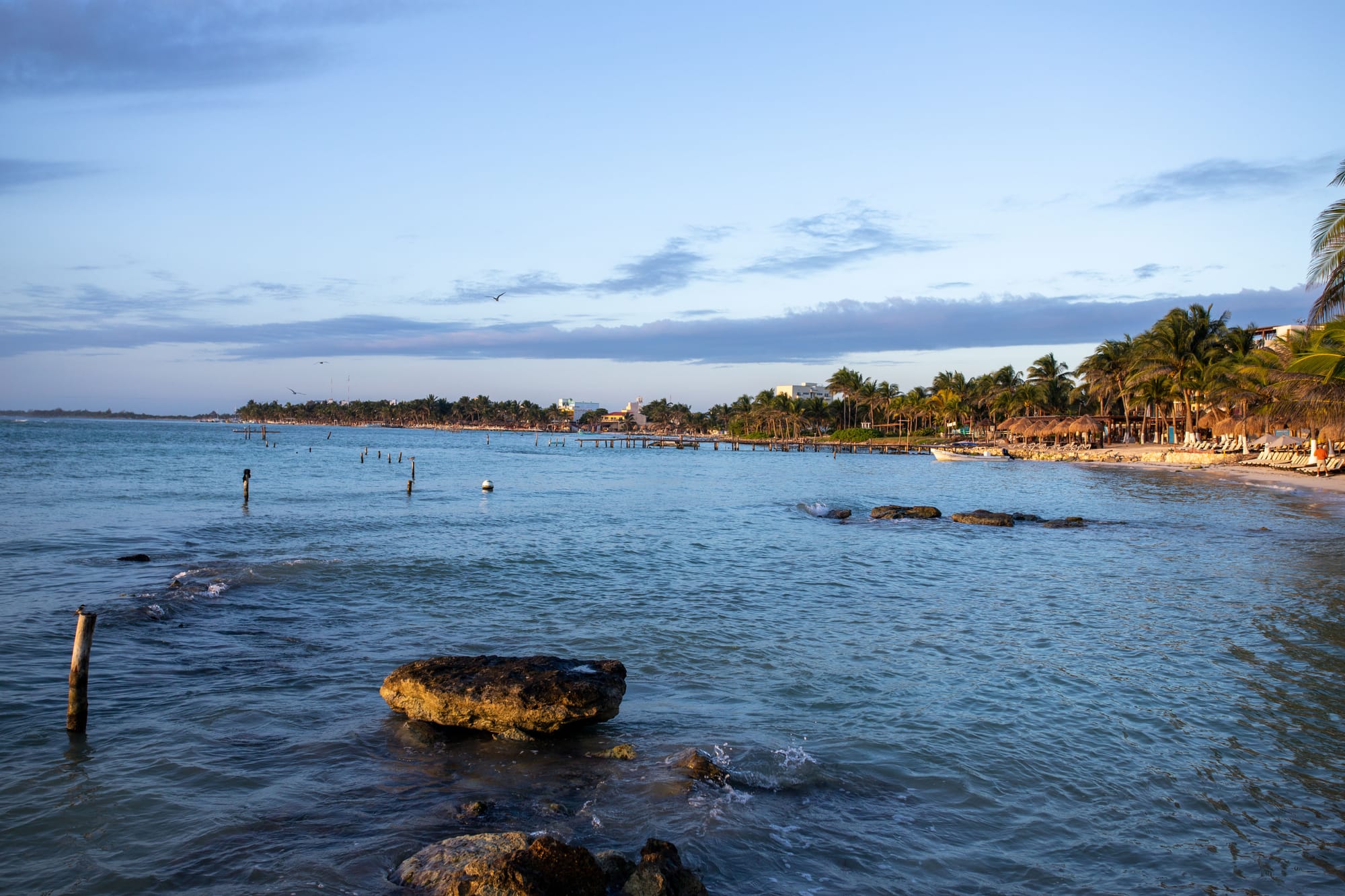
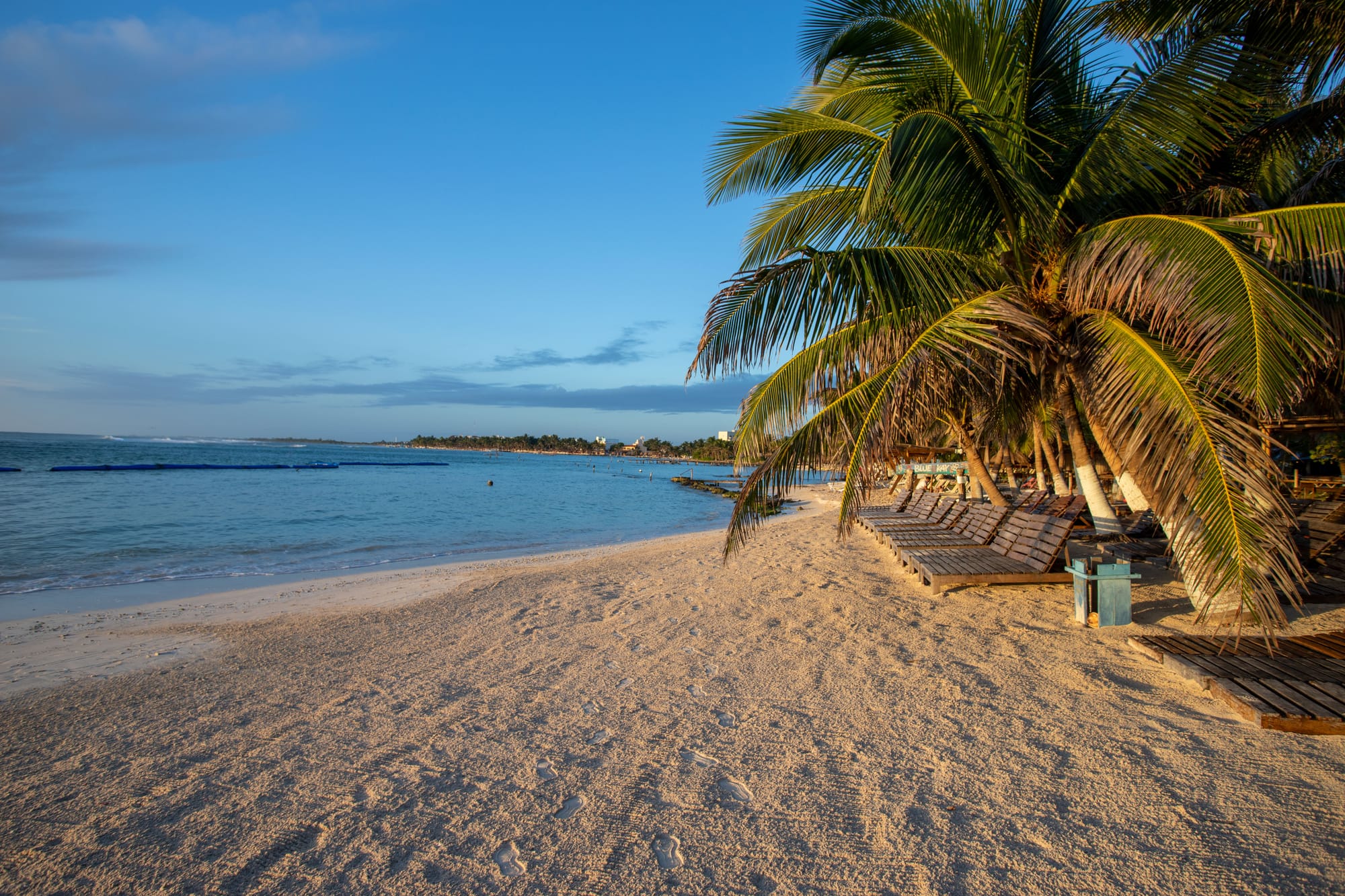
Every morning in the small village of Mahahual on the southern tip of the Yucatán Peninsula, four massive cruise ships dock, spilling out hundreds of entertainment-hungry Western tourists. They hop on golf carts and cruise to the Malecón promenade, where locals, armed with menus in front of polished beach clubs, beckon them in English to spend their money. That’s how the day goes until the ship horns blare in the evening, signaling the return of the now-tipsy travelers to their expensive voyage. The village breathes a sigh of relief, the Malecón empties, the restaurant owners tally up, and Mahahual turns into a ghost town. Locals grab a beer from the store and enjoy their well-deserved rest with tortillas and rice on a tray.
This is a striking illustration of the clash between two worlds. And yet, they complement each other perfectly. There’s nothing inherently wrong with either. I’m not one to criticize people for having fun or others for making a living off it. After all, at the end of the day, both sides seem content. The problem arises when you don’t belong to either world: you’re too foreign for locals to stop shouting English promotions at you, yet not foreign enough to join the jubilant American tourists with ease.
From the moment I arrived, I felt out of place, like an intruder in both worlds. But amid all this, I found kindred spirits. One of them was Eduardo, who introduced himself as "Vagabondo" – a vagabond, a drifter, or a homeless man, if you will.
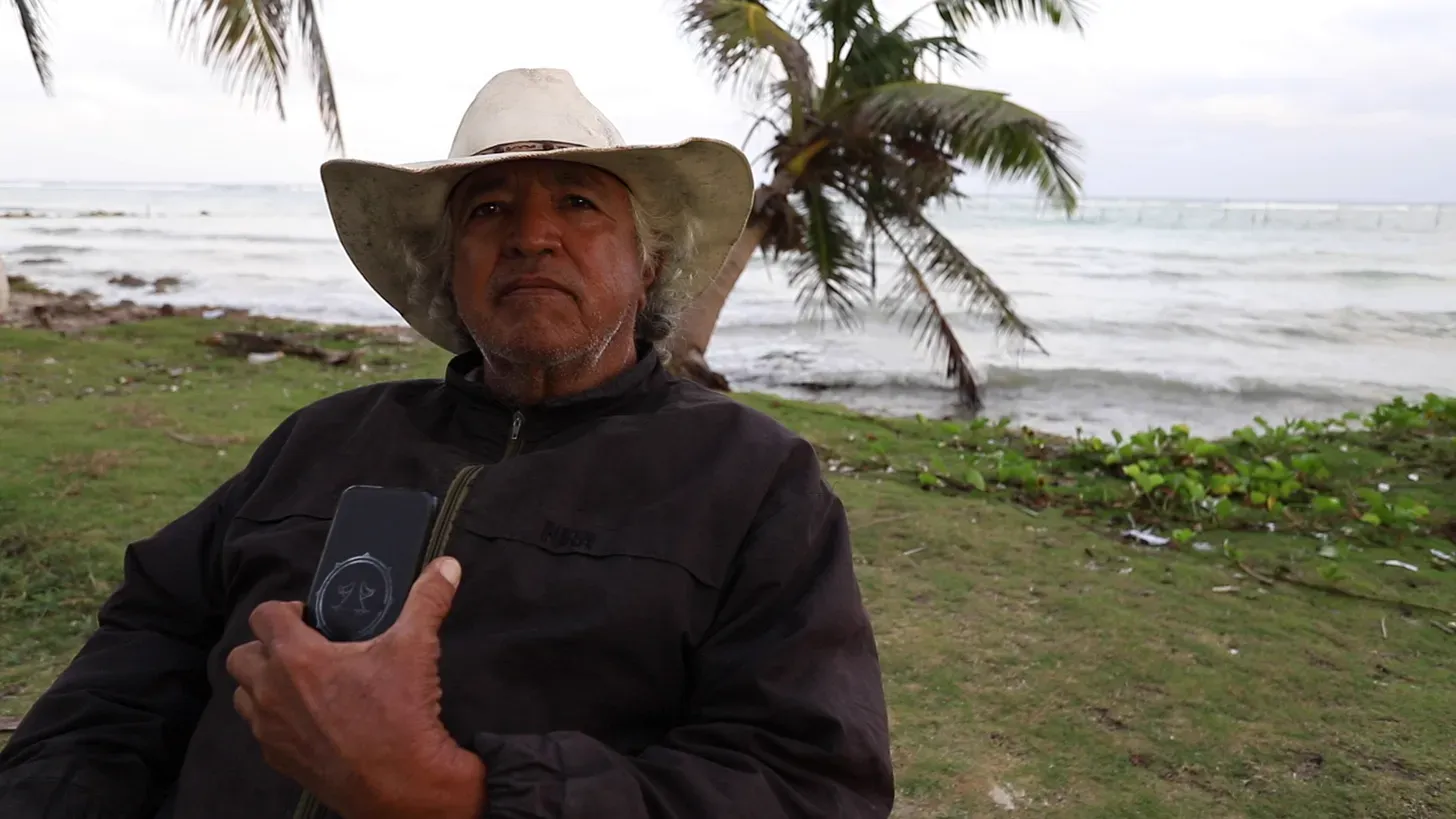
From the first day, Eduardo caught my attention. He sat near the Malecón, smiling, perhaps selling something, but unlike the others, he wasn’t shouting at anyone or trying too hard. He was just there at his little table. I immediately dubbed him Axl Rose for his torn jeans and straw cowboy hat. Beneath it, silver curls hinted at his age, and below them, the wrinkles of a kind, rounded face.
From his plastic chair, he observed the scene before him, with the sea murmuring behind him. On his table lay neatly arranged minerals of various shapes and origins, alongside handmade seaside jewelry. That alone caught my eye – amid the uniform, unsightly trinkets of other vendors, covered in dust and haphazardly thrown on shabby tablecloths, here was someone with an artistic idea. I no longer collect bracelets by the sea, but these called to me. They carried an air of nostalgia, and I felt compelled to take one home. "I’ll stop by someday," I promised myself as I passed by for the first time.
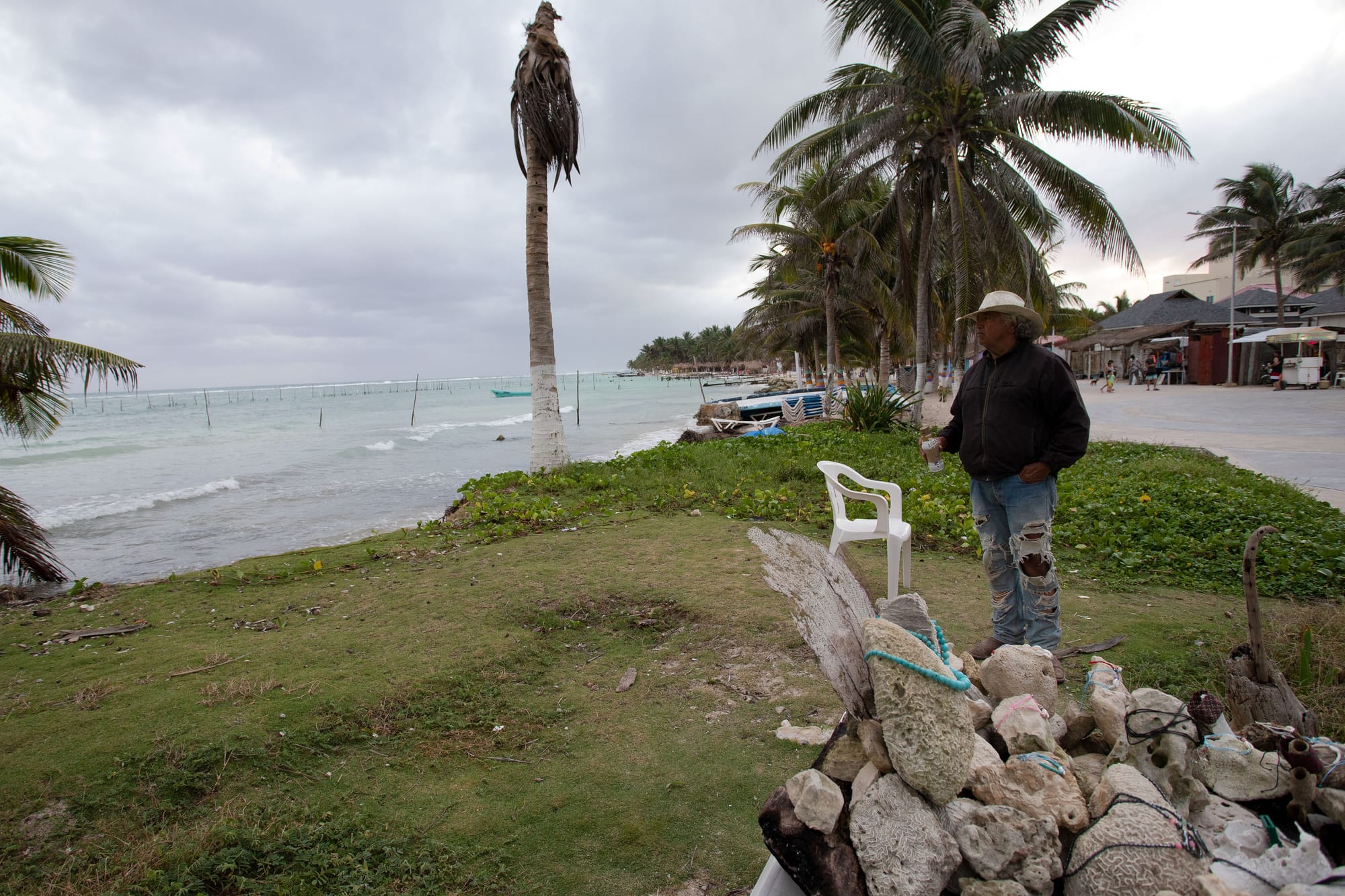
Little did I know who this man was until Andrea told me. Andrea worked at the reception of the place where I stayed. She was from Atlixco, one of my favorite towns near Mexico City (you might remember it from a previous report), and perhaps that’s why we got along so well. She was different from most people I had met in Mahahual, with none of the aloofness that others seemed to exude.
 Václav Lang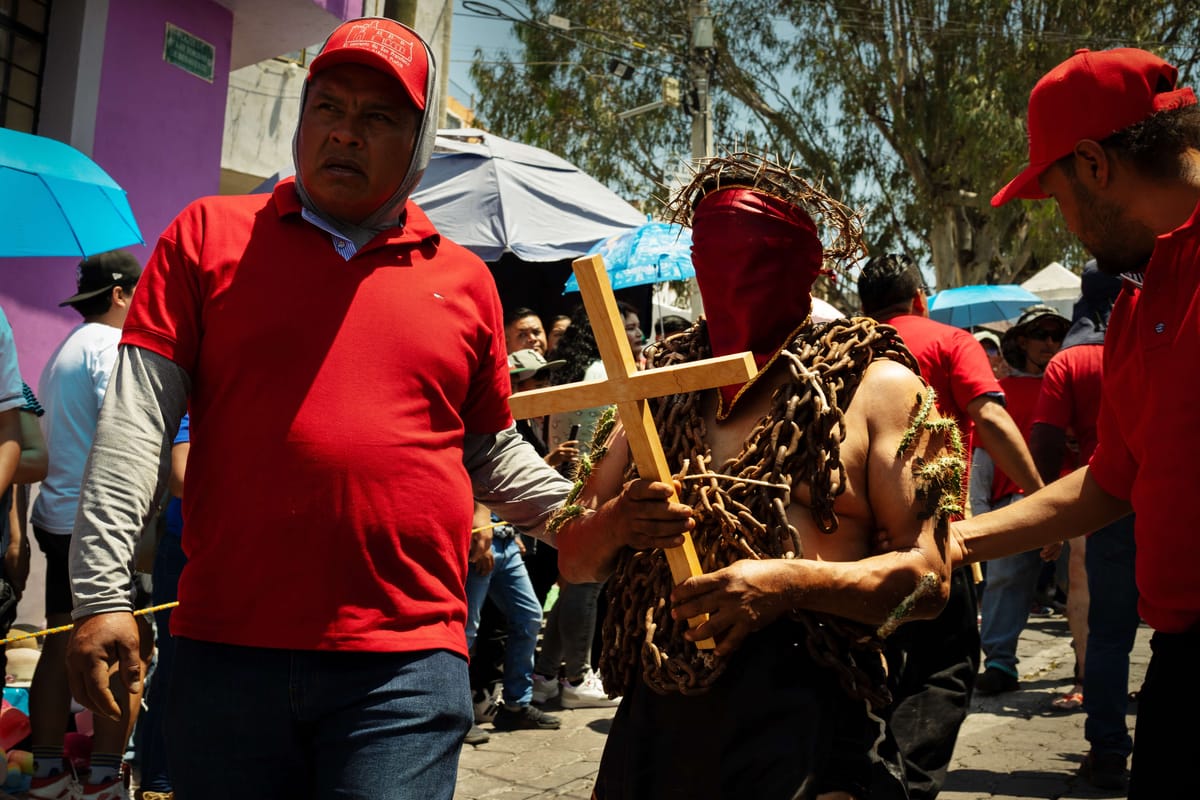
One evening, Andrea was late for dinner. "I got caught up talking to Eduardo," she explained. It turned out he was the man in the torn jeans and hat. She told me he was very wise, educated, and well-read, even though he lived on the streets next to his bracelet stall. I wasn’t surprised; from the start, it was clear he was someone special.
Kundera, Occupation, and the Desire for Freedom
I came to Mahahual with another idea: to start working on a short documentary in which I’d talk to interesting people about life’s questions. You can probably guess that Eduardo was just the kind of person I had in mind.
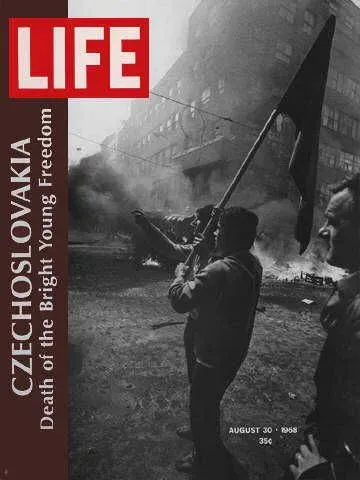
The next day, I stopped by his stall. At first, we chatted as a vendor and buyer about his bracelets. I’m not sure how it happened, but soon we were talking about the Czech writter Milan Kundera, with Eduardo shaking his head and saying, "Strange how your country only wanted him once he made it big abroad, just to leech off him." He told me how, in August 1968, he was captivated by a photo on the cover of Life magazine showing Czechoslovak patriots standing with a flag in front of Soviet tanks in occupied Prague. It was clear I was in the presence of someone well-read and knowledgeable.
We discussed journalism, and he stressed how vital a responsibility it is. When I countered that it’s been going downhill lately, along with its sense of responsibility, he reminded me that even Ernest Hemingway, Mark Twain, and Rudyard Kipling started as journalists.
Kipling was his favorite. He often quoted Kipling’s poem If, a guide for young men from a father. Eduardo said he revisits it whenever he feels low, especially during Christmas. "It’s a sad time for humanity," he said. Then he added that he’s a free spirit who values his freedom above all. It felt like hearing my own thoughts. "But free spirits often find themselves alone," he added.
Eduardo told me he has an exceptional memory, which showed in his ability to quote books for every situation. He studied anthropology in Veracruz, where he’s from, because, as he said, it’s the foundation of all human knowledge. For nearly half a century, he’s lived on the streets, a choice he made to embrace freedom. One evening, as a young man, he was sitting in a casino in the port of Veracruz, and the next day, he became a vagabond. Now he sleeps in a tent beside his bracelet stall on the promenade. Sometimes friends offer him a place to stay, but he’s content as he is.
Dream and Have Goals!
We talked for a while about books, and then I asked Eduardo if he’d be willing to do an on-camera interview for my documentary. He agreed, and I soon returned with my equipment.
Initially, I hadn’t planned to release the interview before completing the mini-film. But Eduardo’s message resonated with me so deeply—and feels especially relevant now, as we set goals and intentions for the new year—that I want to share some insights that touched me the most. Perhaps they might also help some of you, who, like me, are seeking direction for the days ahead.
Naturally, we discussed death and the meaning of life. “Death is really just transformation. Matter transforms—it doesn’t die, right? In the end, we become vegetation, trees... That’s what I think about the significance of life,” Eduardo told me. “And also that it’s essential to always have goals. I find it very hard to accept the Western mentality, particularly in industrialized, wealthy countries. The idea of reaching a certain age, sitting in a chair, watching the news, and waiting for death? That seems absurd to me. I’ll turn 74 on March 4th, but having goals is still vital to me. They could even be dreams. And that’s what keeps you alive.”
Dreams were, in fact, where it all started—our entire conversation. “Since childhood, I’ve always dreamed. It shaped me a lot. Alexandre Dumas, The Three Musketeers, Mark Twain, Robinson Crusoe, Treasure Island—those were my dreams. We all have dreams as children, but only some manage to bring them to life,” Eduardo reflected and left me with this message: “Dream! Even if you keep your feet firmly on the ground. Without dreams, there would be no Martin Luther King. Obama wouldn’t have become president. People wouldn’t have reached the Moon. All of that started with imagination. And if you can imagine it, you can achieve it!”
I couldn’t help but ask about nightmares. There, in the Caribbean at sunset, everything seemed idyllic. But I bet this nomadic life isn’t all smooth sailing. I asked him if he feared anything. “Fear is like a belly button. There isn’t a single person without it,” Eduardo replied. “Even John Rambo, Captain America, and Indiana Jones have fears. And those who claim they don’t are often the biggest cowards. But you need to know your fears, control them, and overcome them. Remember what I told you earlier about that Life magazine cover where your countryman stood in front of a Soviet tank? Even though he knew they could do to him what they did in Beijing, where people were massacred. That photo made him immortal.”
Thanks to Eduardo, I reaffirmed what’s essential: to have dreams, goals, and the courage to bring them to life, no matter the cost. Just like he chose to leave a system he didn’t fit into and live life on his terms, being his own master. Even if it means giving up comfort. But having dreams and pursuing them is vital. Without that, nothing makes sense.
Enjoy the Sunset and Go to Sleep
Finally, I asked Eduardo the question I pose to everyone I interview for the documentary: If you knew tomorrow was your last day, what would you do?
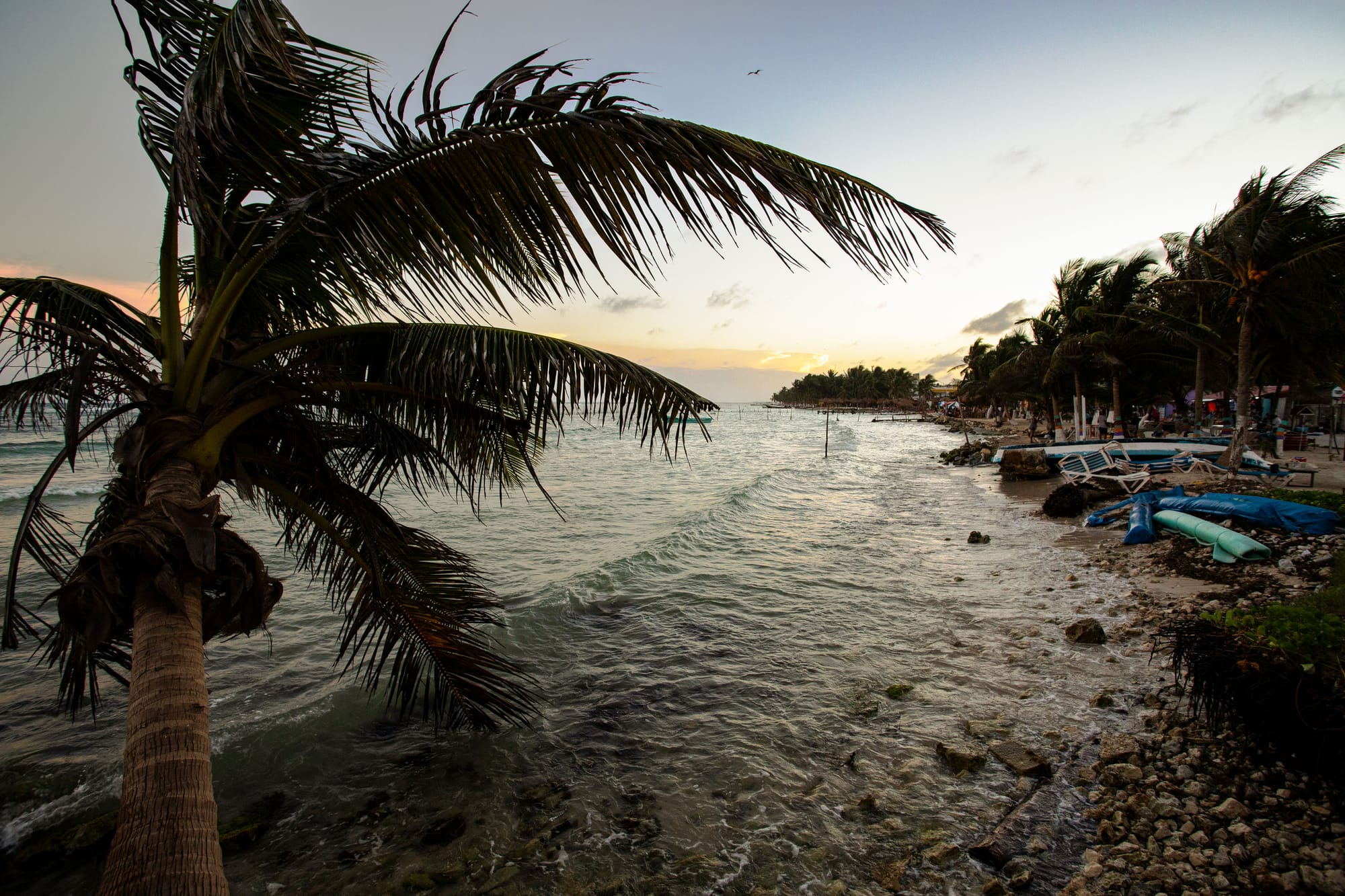
“Wow. That’s fascinating. It’s fascinating to think about what I’d want to do on the last day of my life. I’d live it to the fullest. Watch the sunrise. Watch the sunset. And go to sleep. Go to sleep in complete peace. Because that’s the most normal thing.”
To that, I’d like to add my own New Year’s message—hard-earned through 2024: The only thing you have, and always will have, is yourself in your purest form. Your mind, your heart, your soul, and the rest of your body. Take care of it, because nothing else truly belongs to you. Money will come and go, loves will come and go, your loved ones will come and go, your job, possessions, and even feelings of happiness will come and go. You can’t stop any of it, and if you base your happiness on these fleeting, uncertain things, your world will crumble when they leave. That’s why the most important thing is to care for yourself and give yourself what you truly need. Everything else will follow.
Here’s to a successful 2025—may you pursue and achieve your dreams!
Note: As this article was originally published in Czech in early 2025, I would like to take this opportunity to wish you all the best for 2026! May it be even better than the previous year.